 Gilles Crofils
StreetVision
March 2025. A good surprise in my inbox.
I tried a prompt, it works. Can you take it from here?
- E.
Some context. Consultants who prepare cycling schemes for Active Travel England score every junction on a route by hand, in a spreadsheet. E.'s partner, a transport engineer, had spent his graduate years doing exactly that. He knew the pain. Their idea: a satellite picture in, a score out, and AI vision doing the tedious part in between.
StreetVision ATE Checks
E.
to Gilles
Hi Gilles,
I hope you are well. Below is the prompt given to ChatGPT:
You said:
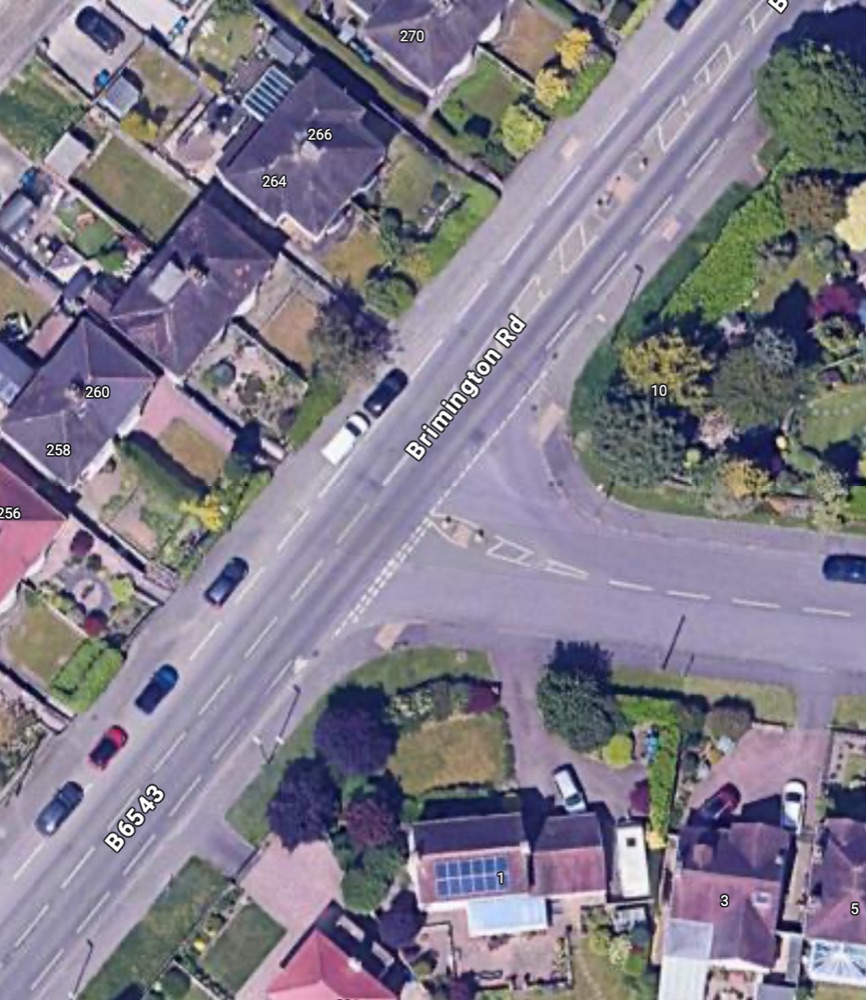
Assess this junction for cyclists against the below criteria:
| Type of junction | Cycle movement being assessed | Suitable only for confident existing cyclists, and may be avoided by some experienced cyclists Conditions are most likely to give rise to the most common collision types Score = 0 | Likely to be more acceptable to most cyclists, but may still pose problems for less confident or new cyclists The risk of collisions has been reduced by design layout or traffic management interventions Score = 1 | Suitable for all potential and existing cyclists The potential for collisions has been removed, or managed to a high standard of safety for cyclists Score = 2 |
|---|---|---|---|---|
Simple priority T-junction In addition to and notwithstanding any of the above “any junction” conditions | Right turn from minor arm | Heavy traffic movements and/or high bus and HGV flows in potential conflict with cycle movement, with no physical refuge in the centre of the major road (including ghost island junction).61 | Central refuge allowing two-stage cycle movement crossing one traffic lane at a time. | Cycle movement made via crossing of major arm with dedicated cycle signals or cycle priority. |
| Left turn from major arm | Side road entry treatment (table across minor arm). | Continuous footway and cycle track across minor arm. | ||
| Right turn from major arm | Heavy traffic movements and/or high bus and HGV flows in potential conflict with no physical refuge in the centre of major road (including ghost island junction). | Protected turning refuge allowing two stage cycle movement, crossing one lane at a time. | Cycle movement made via crossing of major arm via dedicated cycle signals or cycle priority. | |
| Ahead on major arm, crossing minor arm | Congested conditions causing poor visibility for right-turning motor vehicles from major arm. Junction corner radius ≥9m, including where off-carriageway cycle track crosses minor arm. | Junction free from queueing traffic and cycle lane on major arm meeting desirable minimum width requirements. Junction corner radius <9m, including where off-carriageway cycle track crosses minor arm without priority. Side road entry treatment (table across minor arm). | Off-carriageway cycle track or stepped cycle track alongside major arm, crossing minor arm with priority over turning traffic.62 |
ChatGPT said:
Assessing the junction shown in the image against the scoring criteria for cycling safety:
- Type of Junction: Appears to be a staggered T-junction on a busy road.
- Cycling Provision:
- No visible cycle-specific infrastructure (e.g., cycle lanes or crossings).
- Potential conflict points for cyclists turning right, especially across fast-moving or high-volume traffic.
- Lack of refuges or priority measures for crossing cyclists.
Likely Score:
- Score 0: The junction seems suitable only for confident cyclists, with conditions giving rise to potential collision risks. To improve, consider adding refuges, priority crossings, or continuous cycle tracks.
You said:
score each possible movement a cyclist could take.
ChatGPT said:
Here is the scoring for each possible cyclist movement at the junction:
- Right Turn from Minor Arm (e.g., Brimington Road to B6543):
- Score: 0
- No central refuge or protection for crossing multiple lanes.
- High potential conflict with fast-moving traffic on B6543.
- Score: 0
- Left Turn from Minor Arm (Brimington Road to B6543):
- Score: 1
- Safer due to no crossing of traffic lanes, but no specific cycle facilities.
- Conflict with merging traffic possible.
- Score: 1
- Ahead from Minor Arm to Opposite Minor Arm:
- Score: 0
- No infrastructure for safe crossing of the main road.
- Heavy traffic conflict likely.
- Score: 0
- Left Turn from Major Arm (B6543 into Brimington Road):
- Score: 1
- Straightforward with minor conflicts, but no cycle priority measures.
- Score: 1
- Right Turn from Major Arm (B6543 into Brimington Road):
- Score: 0
- No central refuge, forcing cyclists to navigate multiple lanes.
- Score: 0
- Ahead Along Major Arm (B6543):
- Score: 0
- No cycle lanes or protection, leaving cyclists to share space with fast-moving traffic.
- Score: 0
Summary:
This junction scores poorly for cyclists on most movements, indicating a need for significant safety interventions such as refuges, cycle lanes, or signalized crossings.
Below is more information about the work but it would be useful to have a call with D. for him to explain it in more detail.
https://www.gov.uk/government/publications/active-travel-england-scheme-review-tools
Active Travel England scheme review tools - GOV.UK
Active Travel England (ATE) has developed a suite of tools to support the development of designs and the assessment of design quality for active travel interventions and schemes.These scheme ...
www.gov.uk
Please let me know if you are interested in speaking a little more about this and if we could find a way to collaborate on this project.
Thank you,
E.
The hook
The next evening I had a prototype online. Give it coordinates, it fetches the aerial image and returns a score with its reasoning. I wrote back that it didn't look too challenging. A few days later, the 3 of us had stopped testing and started celebrating. I was working out a licence price over my morning coffee.
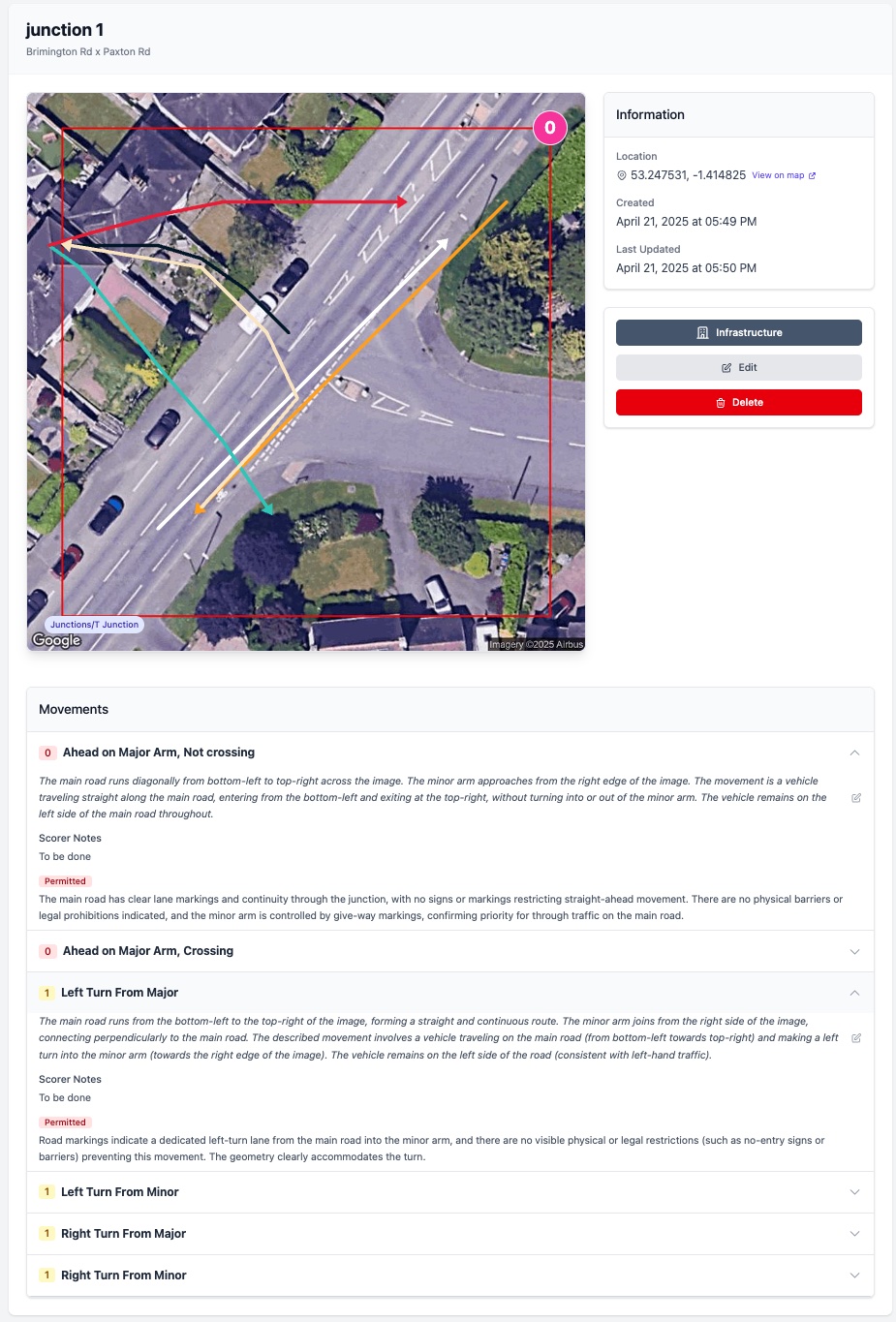
I was hooked.
The magic wears off
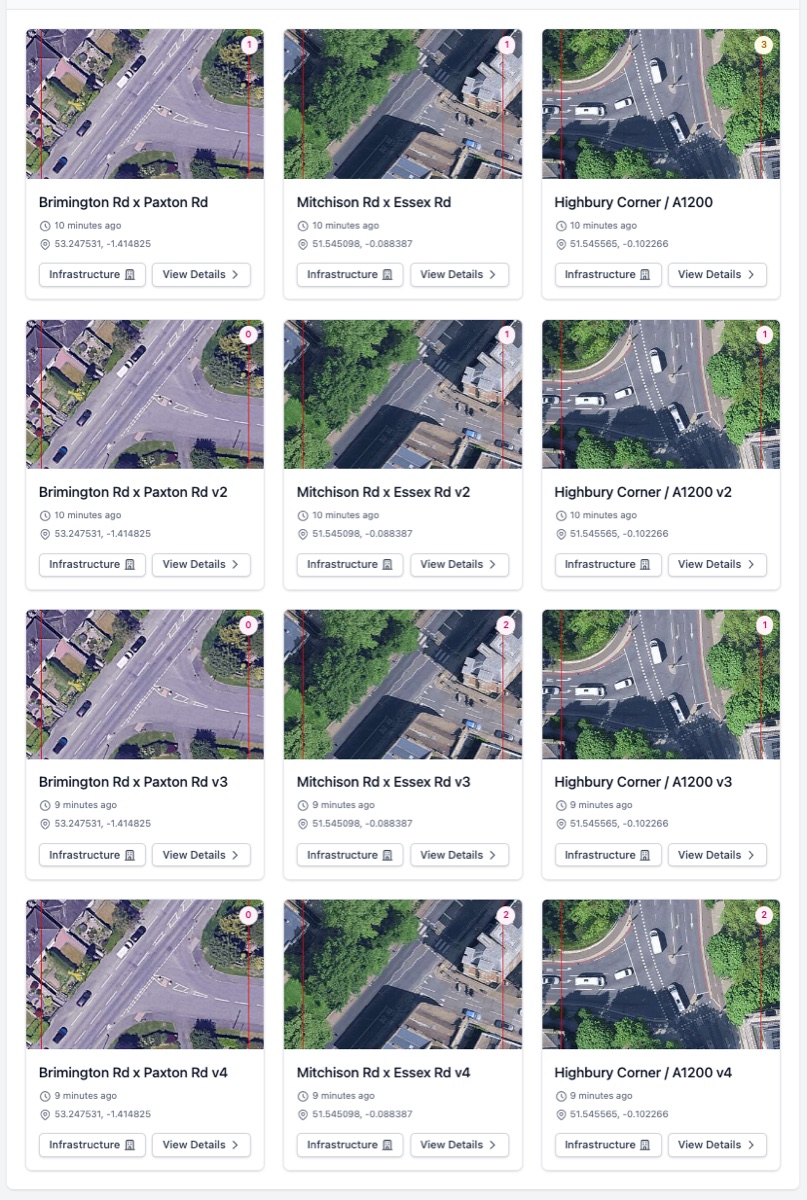
It was always almost right. We refined the requirements and the tests. One of them: run the same 3 junctions 4 times in a row. No junction got the same score 4 times. One went 1, 0, 0, 0. Another 1, 1, 2, 2. Prompt engineering fixed one junction and broke another.
So I changed the approach. Don't ask the model for a score. Collect facts about the junction, then compute the score with plain rules. That meant learning the rules, and the grid was only their visible part. Each cyclist movement needed its own assessment, with criteria that could differ depending on the direction of travel. It took me 3 weeks to understand that. "Training a graduate is difficult," D. said. He was patient with this one.
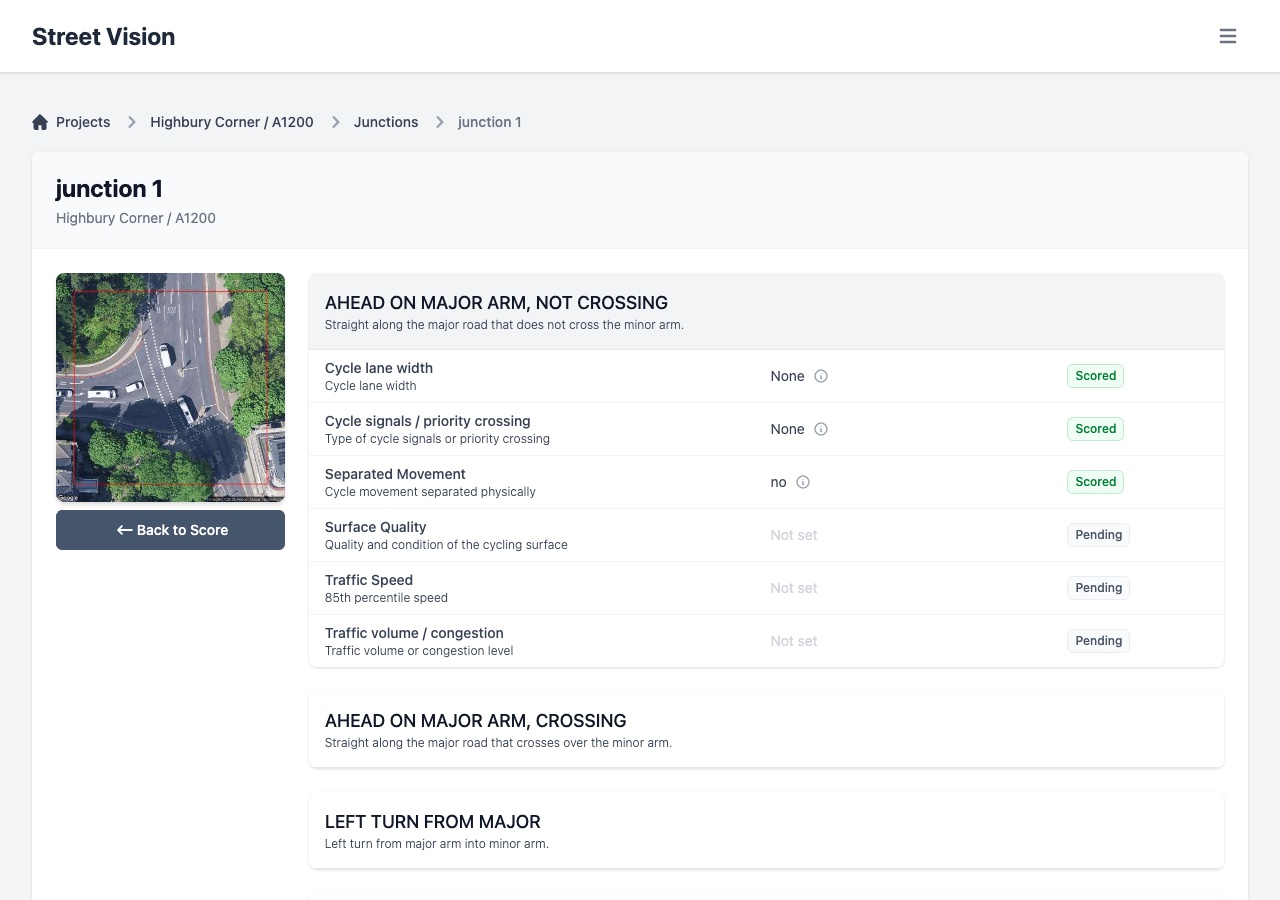
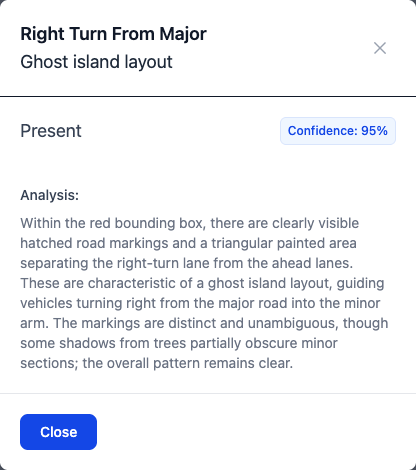
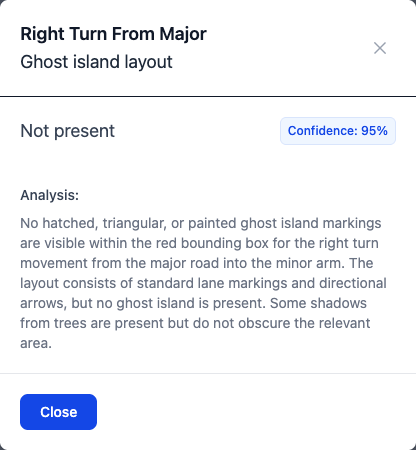
D. listed 15 facts to establish per junction. Is there a central refuge? A cycle signal? A ghost island? Map data gave us some. For the rest, I asked the model one narrow question at a time, and built a test bench to ask each question again and again. Same junction, same question. "Clearly visible hatched road markings", confidence 95%. Then "no hatched markings are visible", confidence 95%.
New reasoning models were appearing. We tried them too. They wrote better explanations. One afternoon I sent the team a result with this comment: "It's pretty convincing. If only it could be also correct."
More attempts, more exploration. Several days later, I wrote what I had been avoiding: it just does not work. It just can not work.
Magic will have to wait
We stopped asking AI to judge. New plan: build a tool that walks the engineer through the method, fills in what public data already knows, and leaves the judgement to them. Automate one fact at a time, only once it is proven. Less magic. And a real software project: months of work, not evenings. Over the summer, we worked through what such a product would involve. It was a long way from the little prototype I had priced over coffee.
E. and D. wanted a demo to take to potential clients: letters of intent first, then funding or a co-development partner. Their buyers were cautious organisations with long procurement cycles, and a working demo would give them something concrete to discuss.
I wasn't convinced we knew what clients would actually pay for, or how long they would take to commit. We had already built a prototype and proven the shortcut didn't work. I estimated the demo would take 9 months, believing it would eventually become an MVP to be convincing enough. 9 months for iterative implementation. 9 months for getting the requirements right. 9 months for working through the edge cases. 9 months for everything else that comes with building an actual product. And throughout those 9 months, the hardest part: coordinating our schedules, given that I would have been the only one working on it nearly full-time.
I've encountered this situation many times in my career: someone comes to me with a business idea and sees the software as one step in their plan. I'm enthusiastic about exploring the idea, but it always comes down to trust. Business needs tech to commit before it can sell. Tech needs to see it sell before committing.
In August 2025, they suggested we stop. I agreed immediately. We had enjoyed working together. That wasn't enough to make us the right partners for the next stage.
Not too challenging? Hmm.
I wrote this story in November 2026, with Fable 5.2 reading the old emails and chats alongside me. It stopped at the very first email. ChatGPT listed 6 movements. ChatGPT gave 6 scores. 2 more than the grid asked for. One was "Ahead from Minor Arm to Opposite Minor Arm". Except there was no opposite minor arm. 3 of us had read it. None of us stopped there. It was convincing. Not too challenging. Hmm.
We couldn't make it work back in spring 2025. Maybe Fable would get it right today, or the next one tomorrow. But ultimately, technology was never the real obstacle. So, whatever the model, whatever the next revolution, I'd start the same way, optimistic, and explore the opportunity iteratively: the team, the tech, the business and the team.