 Gilles Crofils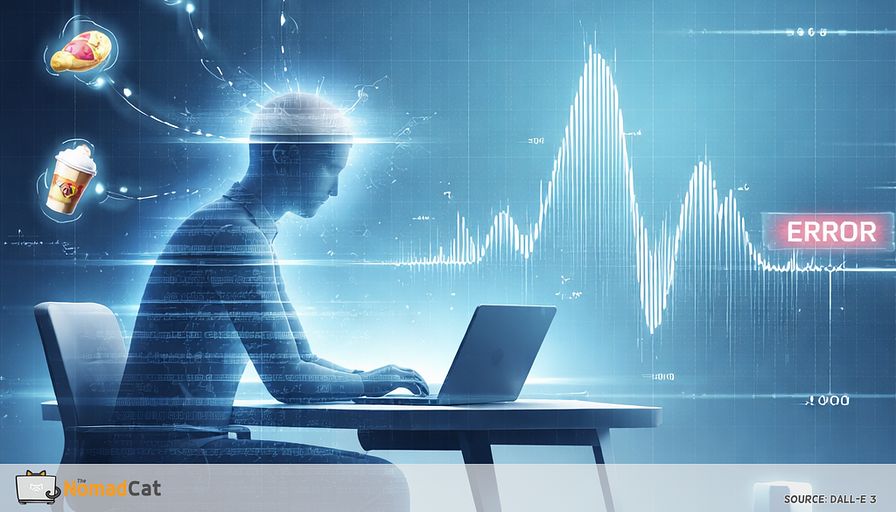
If your afternoons keep falling apart, it is tempting to blame willpower. Or blame carbs. Or blame that one meeting that ate your lunch break again.
But there is a more boring explanation. A desk day has its own physics. I studied fundamental physics in Paris, so I can’t not see this as input-output: the desk constraints pick the foods. It rewards foods that are quiet, one-handed, low-mess, and easy to eat while your brain is still on the spreadsheet. So the day fills up with tiny carb-first inputs that barely register as “eating” at all. 2 biscuits while something loads. A few chips from an open bag. A sweet coffee that counts as a snack but pretends to be a beverage. Individually, nothing dramatic. Together, it becomes a drip feed that leaves you weirdly not-full and not-hungry at 14:30, then somehow ravenous or blocked by dinner.
Treat it like a system bug: identify the drift pattern, rule out confounders, then test 1 small desk-proof fix. The goal is not perfection. It is fewer avoidable spikes and crashes layered on top of an already busy day.
Micro carb drift is a system bug not a willpower issue
What micro carb drift looks like at a desk
Micro carb drift is what happens when the day fills up with tiny carb-first inputs that feel too small to count. They fit desk constraints almost too well. One-handed, low mess, pause-safe, quiet enough to not announce snack break in a meeting. Under pressure, convenience drives food choice more than good intentions.
Typical drift inputs
- 2 biscuits while something loads
- office candy from the bowl
- a few chips from an open bag
- 1 banana by itself
- half a muffin because it was there
- kid snacks from the drawer
- a sweet latte or bottled iced coffee
- a granola bar that is basically dessert in sportswear
Individually, none of these is dramatic. The signature is boring and consistent.
Carbs keep arriving alone, without much protein, fiber, or volume to create a stable baseline. Many standard muffins are roughly 350 to 500 kcal, and sweetened latte-style drinks often land around 150 to 300+ kcal depending on size and syrup (USDA FoodData Central).
Micro carb drift can get confused with other patterns.
- Stress snacking loops are more about reaching for quick comfort under pressure.
- Skipped meals are long gaps from time scarcity, then a big rebound later.
Drift is different. You are eating repeatedly, yet nothing really lands as a proper fueling moment. Then the afternoon still collapses.
Why it stays invisible even to careful people
Desk eating often happens between tabs, not at a table. Slack ping, camera on, mute button, quick bite, back to the sentence. Those are low-salience events, so they don’t register as “I ate.” Distracted eating can also make it harder to remember what you had, and that can feed into eating more later.
Even with decent memory, people often underreport intake, and small snacks plus caloric drinks are the exact things that slip through. That’s not dishonesty. It’s just hard to track what barely felt like a food break.
Then the environment does what environments do. A cookie on the counter is basically a browser pop-up. You don’t choose it so much as you dismiss it, sometimes by eating it. Free food and easy access shape intake in predictable ways.
The 14:30 to 17:00 failure signature
How it feels when the day starts leaking
The weird part is the paradox. Around 14:30 you are not properly full, but also not cleanly hungry. More like mild snackiness, closer to restlessness than appetite.
Common desk symptoms
- opening the same tabs again and again, but nothing starts
- rereading a paragraph 5 times, getting slower not smarter
- your Slack replies get shorter and colder than you intended
- coffee cravings that feel urgent, not enjoyable
- repeated kitchen laps that end in meh food and still no relief
One quick confounder before blaming carbs for everything. Mild dehydration can look like fatigue and mood wobble. Also, breaks reduce fatigue in a boring, reliable way.
By evening, drift often ends in 1 of 2 dinner modes.
- Ravenous at 18:30. Dinner feels like an emergency patch.
- Oddly blocked. You snack around dinner, then later wonder why sleep is messy.
Both can come from noisy inputs, not a character flaw.
Quick checks to separate drift from other problems
- If there was no real break and no real food available, it’s not drift, it’s access. Fixing access beats redesigning snack macros.
- Stress can mute appetite at noon, then hunger comes back loud later.
- Sleep debt makes everything feel like a glucose problem, including attention and cravings.
If drift still fits after those checks, the next question is why desk work selects carb-only inputs in the first place.
Why desk work selects carb-only inputs
The desk compatible food ladder
Food becomes a compatibility test, not a nutrition debate. When the workflow punishes pauses, the winning foods are the ones that do not look like eating.
-
Easiest
- sweet coffee drinks
- cookies, candy, crackers, chips, just 1 bites
-
Harder
- anything needing a fork, a fridge, reheating, or 2 hands
- anchoring foods with protein and fiber that look like an actual meal
Attention fragmentation pushes choices toward the fastest options. Some workplaces also treat busyness like status. It can look like back-to-back video calls where lunch becomes “camera-off for 90 seconds” instead of a break, so the only foods that survive are the ones you can eat without anyone noticing.
Under mental load, choices tilt toward immediate reward and convenience, which often means refined carbs and sweet drinks. Time scarcity pushes the same direction.
Free food behaves like a default
A tray of pastries next to the laptop chargers is not treat time, it’s a default input stream. In Berlin offices I saw this a lot: pastries parked right where everyone queues for chargers and adapters. When food is free, visible, and within arm’s reach, people eat more without a clear decision point.
This travels home too. Different setup, same bug. Snacks at eye level lead to tiny grabs between calls. Delivery apps reduce friction to near zero. The driver is availability plus low friction.
A simple cause and effect map for the afternoon crash
For some people, carb-only hits feel peaky—up, then flat—especially when they replace a real meal. People vary a lot and this is not a diagnosis.
The easiest lever is not carb math. It’s adding what the micro-events are missing.
- Protein across the day tends to help satiety.
- Fiber slows absorption and helps with fullness.
In desk terms, an anchor makes a snack land instead of bouncing.
Sequencing beats meal planning on busy days
Before adding another system to an already packed calendar, keep the scope small. Even with the same lunch foods, changing the order can change how it feels.
A common patch is carb-last when possible. Start with vegetables and protein, finish with the starch.
The strongest data here is often short-term and sometimes in people with insulin resistance, so effects vary. Still, protein and fiber first is low-friction, tends to help satiety for a lot of people, and doesn’t require turning lunch into a spreadsheet.
One 5 day test that makes drift visible
The anchor rule that stops the drip feed
Make it desk-legal and quiet.
If you try 1 thing
Before your 2nd carb-only bite or before coffee #2, try inserting 1 anchor that is protein-forward, or protein plus fiber.
This is sequencing, not restriction. Nothing is forbidden. The point is simply that carbs usually go better when they arrive with something else.
Anchors that compete with desk snacks
- plain Greek yogurt, skyr, or cottage cheese
- 2 eggs, boiled or leftover
- tuna or salmon pouch
- edamame
- hummus with carrots or cucumbers
- nuts plus a piece of fruit
- cheese plus whole-grain crackers
- leftovers that are already fork optional
- a protein shake, not poetry but quiet and fast
Add 1 boring co-input. A glass of water somewhere in that window. Forgetting to drink is common on screen days.
A debug log that does not become tracking
Vague memory, it’s a bad sensor. Add 2 tiny check-ins. No app needed.
- 13:30: mostly nibbles so far, or did an anchor happen yes or no
- 16:30: label the state steady, snacky, sleepy, edgy
Signals to watch
- fewer urgent cravings and fewer rescue snacks
- fewer kitchen laps that end in random bites
- less need for coffee #2 just to feel functional
- dinner feels like a normal decision, not an emergency patch
No promises about weight. If nothing changes after 5 workdays, treat it as a result, not a personal failure. Don’t stack extra food rules. Next suspects are sleep debt, hydration, breaks, and access problems.
Guardrails and a small safety box
Some afternoon dip is just biology plus screen time. The goal is not a perfectly flat 14:00 to 18:00 line. It’s fewer avoidable spikes and crashes layered on top.
If this experiment creates anxiety, rigid rules, or that brittle I must control this feeling, it’s the wrong tool. Flexible, additive language is safer than bans and moral labels.
Stop and seek help flags
Most desk crashes are boring. A few situations should not be debugged with snack tweaks.
- repeated dizziness, fainting, or near-syncope (almost fainting)
- persistent severe fatigue, chest pain, shortness of breath, or unintended weight loss
- diabetes on insulin or sulfonylureas (a type of diabetes medication), or recurrent measured lows
- pregnancy or suspected gestational diabetes
- kidney disease or other medical nutrition constraints
- current or past eating disorder, or strong ED risk signals
Confirmed low glucose in people without diabetes is uncommon when strictly defined, and evaluation relies on Whipple’s triad (a clinical checklist doctors use), not vibes and a snack bar.
The boring takeaway stays the same. Adjust the default inputs and the order, not your personality. A desk day running on carb-only micro-events and acting surprised at 16:00 is pretty consistent with the logs.


