 Gilles Crofils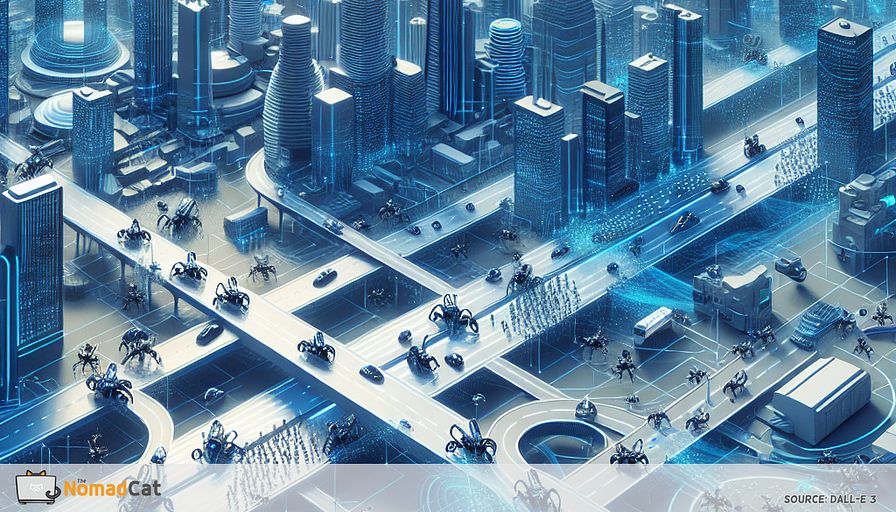
Managing city environments today is no easy task. As cities grow and change rapidly, finding new ways to tackle infrastructure, traffic, and sustainability is more important than ever. Swarm robotics offers a fresh approach to urban planning by mimicking how nature's creatures, like ants and bees, work together. Imagine a city operating smoothly like an ant colony, adjusting to changes with minimal human intervention. Swarm robotics could make cities more resilient and intelligent.
Swarm Robotics in Urban Planning
Cities are becoming increasingly complex, and innovative solutions are needed to manage their growth. Swarm robotics could revolutionize urban planning by imitating how ants and bees manage tasks without a central leader. Reflecting on my own experience as a tech executive, I've seen firsthand how decentralized systems can enhance efficiency and adaptability, much like these natural systems.
Core Principles of Swarm Robotics
Decentralized Control and Self-Organization
Swarm robotics draws inspiration from nature, where systems like ant colonies operate without a central leader, using simple rules to manage complex tasks. This decentralized approach is well-suited for urban areas, where adaptable infrastructure is essential, akin to an ant colony that swiftly responds to environmental changes.
Scalability and Flexibility
A significant advantage of swarm robotics is its scalability and adaptability. As cities expand, it's crucial to adjust solutions quickly. Each robot in a swarm can operate independently while contributing to a common goal. This allows cities to meet new demands without overhauling existing systems.
Ensuring Robustness
Swarm robotics is reliable. If one component fails, others continue to function. This reliability is vital in urban settings. Environmental monitoring case studies demonstrate how swarm robots maintain operations even when some units fail, ensuring continuous service.
Why Swarm Robotics Fits Urban Planning
Decentralized Solutions
Urban environments are complex and expansive, with systems like transportation and utilities. Swarm robotics naturally complements this setup, enhancing efficiency and resilience.
Adaptable to Changes
Urban areas are in constant flux due to events like emergencies. Swarm robotics can quickly adapt to these changes, re-prioritizing tasks on the go. In my experience, this adaptability is crucial for urban resilience.
Smart City Integration
As cities become more interconnected, swarm robotics can play a key role. These systems integrate seamlessly with IoT to optimize traffic, monitor environments, and enhance safety. I've witnessed how such integrations can transform city management, making them smarter and more efficient.
Swarm robotics offers new opportunities by aligning with urban complexity, promising to make cities more efficient and resilient.
Potential Applications of Swarm Robotics
Infrastructure Inspection: Swarm robotics can transform how cities inspect infrastructure. Imagine robots autonomously checking bridges and tunnels, identifying issues before they become costly. These robots can access hazardous areas, reducing risks for humans and providing continuous monitoring.
Traffic Management: Traffic congestion is a significant issue in cities. Swarm robotics offers a solution through real-time data processing to manage traffic flow. For instance, drones in Europe already help manage congestion, illustrating this technology's potential.
Waste Management: Swarm robots can sort and process waste, enhancing recycling and reducing manual labor. They can adapt to different waste types, making urban waste management more efficient.
Smart Construction: Swarm robotics can reduce costs and time in construction by coordinating tasks like material delivery and assembly. Projects in Europe demonstrate how these systems can improve construction efficiency.
Advancements Enabling Swarm Robotics
AI and Machine Learning
AI enhances how swarm robots coordinate and adapt, allowing them to operate efficiently without human intervention. They can navigate complex environments and optimize energy use for extended operations.
Integration Challenges
Deploying swarm robotics in cities faces challenges such as network congestion and GPS limitations. Advanced communication protocols and successful case studies help overcome these obstacles, ensuring effective deployment.
Challenges and Opportunities
Overcoming Challenges
Public acceptance and safety are key concerns. Ensuring safety and meeting regulations is crucial. Collaboration between tech companies and cities can address these challenges and unlock innovation. From my perspective, fostering these partnerships is essential for progress.
Embracing Opportunities
Swarm robotics offers innovative solutions to urban challenges like congestion and resource management. Startups can develop new services for urban markets, while partnerships between tech companies and cities can drive advancements. I've seen how these collaborations can lead to groundbreaking solutions.
Navigating the Regulatory Landscape in Europe
EU-Specific Regulations
To deploy swarm robotics, understanding EU regulations is crucial. Compliance with data privacy and safety directives ensures legal and safe operations. In my role, navigating these regulations has been a key focus to ensure successful implementation.
Navigating Compliance
Understanding local regulations and engaging with regulatory bodies helps ensure successful deployment. Projects like Kilobots demonstrate how compliance can be effectively achieved.
Swarm robotics is transforming how cities operate by introducing efficient, adaptable systems. This technology promises improved traffic management, waste handling, and infrastructure safety, paving the way for smarter cities.


