 Gilles Crofils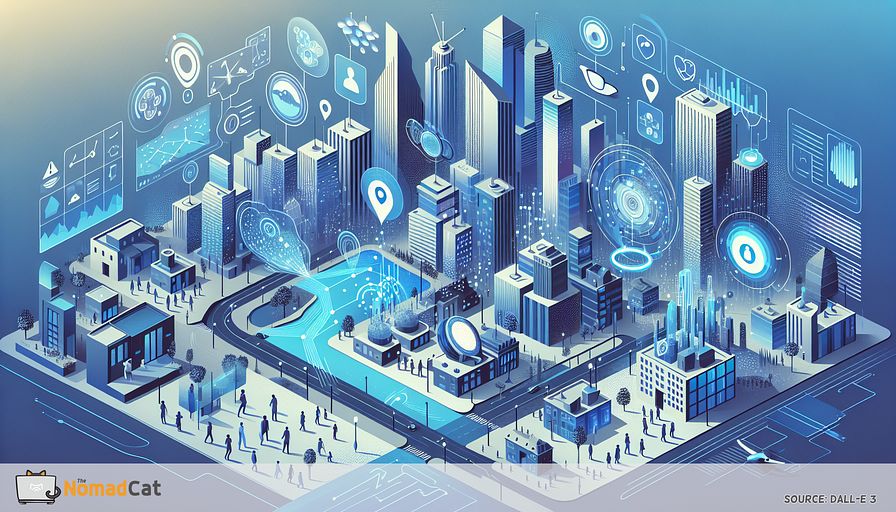
how augmented reality is transforming navigation
Augmented reality (AR) is reshaping how we navigate, offering a more immersive and interactive experience compared to traditional maps. This technological advancement leverages devices such as smartphones and AR glasses to overlay digital information directly onto the physical environment, making navigation more intuitive and engaging. Imagine walking down a street and having real-time directions, points of interest, or traffic updates projected seamlessly onto your field of view. This is the power of AR in redefining navigation.
Traditional maps and GPS applications, while highly useful, often require us to divert our attention from the physical world to a screen. AR, on the other hand, integrates digital directions with the real world, freeing users from constantly switching their gaze between their device and the surroundings. This synergy between the digital and physical realms fundamentally enhances the way users interact with their environment.
By utilizing AR-enabled devices, users can enjoy a host of enhanced features:
- Real-time directions: Get turn-by-turn instructions projected over the real-world path.
- Contextual information: Access detailed information about landmarks, businesses, and other points of interest.
- Enhanced safety: Maintain awareness of your surroundings since virtual elements are superimposed directly into your line of sight.
This transformative capability extends beyond just getting from point A to point B. AR allows for a richer, more informed navigational experience. By seeing directions and contextual information live within their environment, users can make better decisions and explore new places with greater confidence. As AR technology continues to evolve, its integration into daily navigation promises to be an exciting shift towards a more connected, nuanced way of experiencing the world.
real-time directions and contextual information
Augmented reality isn't just about enhancing our visual experience; it’s redefining how we navigate the world with real-time directions and contextual information. AR technology seamlessly merges digital data with the real world, creating a more intuitive and engaging navigation process. Instead of staring at a static map, AR provides dynamic guidance, transforming the way we explore both familiar and unfamiliar places.
intuitive navigation through real-time directions
Gone are the days of constantly glancing down at our phones for turn-by-turn directions. With AR, directions are superimposed directly onto your path, making navigation feel almost effortless. Picture walking through a bustling city and having arrows or markers displayed right in front of you, illustrating your next turn or indicating the distance to your destination. This method significantly enhances the ease of following directions without needing to split attention between a screen and the physical world.
This immersive navigation tool is particularly beneficial in urban areas, where the labyrinth of streets and alleys can be confusing. AR can illuminate the way, guiding users through complex intersections and providing a clearer understanding of their route. It greatly reduces the risk of taking wrong turns and ensures a smoother journey.
exploring with contextual information
But AR doesn't stop at providing directions. It enriches the experience by offering contextual information about the surroundings. Imagine walking past a historic building and seeing relevant information, including its history, architectural style, and opening hours, right before your eyes. For travelers and locals alike, this brings a new depth to urban exploration.
Businesses can also benefit from AR by having their information, reviews, and special offers readily accessible to potential customers passing by. Whether you're looking for a restaurant, a store, or an attraction, AR can display details like opening hours, ratings, or even live occupancy numbers, helping you make informed decisions on the spot.
enhancing safety with real-time alerts
Safety is another critical aspect where AR excels. By overlaying safety alerts or warnings onto the user's field of view, AR enhances situational awareness. For instance, if there’s construction work ahead, AR can highlight the area and suggest alternative routes. Similarly, it can alert pedestrians to dangerous spots or areas with higher traffic, contributing to safer navigation.
In addition, AR can assist drivers by providing real-time hazard warnings, such as icy roads or sudden traffic changes, directly on the windshield through AR windshields or heads-up displays (HUDs). This keeps drivers’ eyes on the road while still receiving crucial information, thus reducing the chances of accidents.
bridging the gap for user convenience
The integration of AR into navigation bridges the gap between digital convenience and physical exploration. With real-time data and contextual nuggets, users enjoy a level of convenience previously unattainable with traditional map applications. No longer do you need to pause and interpret a map; the information flows seamlessly into your experience, making it more fluid and natural.
This real-time interaction transforms urban trekking, enabling users to uncover hidden gems in their cities or get a deeper understanding of different places on the go. From finding the nearest ATM to discovering a quaint café tucked away in an alley, AR enriches everyday experiences with layers of useful information.
Furthermore, public transport users can benefit immensely from AR navigation. Imagine scanning your surroundings at a busy station and instantly knowing which platform to head to, the departure time of your train, or even real-time delays. It can turn a potentially stressful environment into a manageable and even enjoyable one.
the future holds even more promise
As AR technology continues to develop, we can expect even more sophisticated features that will further enhance our navigation experiences. From personalized suggestions based on your preferences to more robust integration with other smart devices, the future of navigation with AR looks incredibly promising. And as more people adopt this technology, the collective knowledge and feedback will drive continuous improvements and innovations.
In conclusion, the fusion of AR with navigation is more than just a technological advancement; it’s an evolution in how we connect with our surroundings. By providing real-time directions and rich contextual information, AR not only makes navigation easier but also turns everyday exploration into a more immersive and informative activity. With these incredible benefits, AR is poised to become a fundamental aspect of navigating the world around us.
opportunities for technology leaders
Augmented reality presents a wealth of opportunities for technology leaders in the navigation and mapping industry. By integrating AR into navigation systems, tech leaders can significantly enhance user engagement and set new benchmarks in the industry. This seamless blend of digital content with the physical world opens up new pathways for location-based services, making everyday navigation more interactive and informative.
enhancing user engagement
One of the most immediate benefits of AR in navigation is the potential to amplify user engagement. Traditional navigation tools, while functional, can sometimes feel static and uninspiring. AR transforms this experience by making it dynamic and visually appealing. Users can interact with real-world landmarks and digital overlays simultaneously, creating a more immersive journey.
Furthermore, gamification elements can be introduced to navigation through AR, making journeys more enjoyable. Imagine earning points or mastering levels as you navigate through a city. Such features can turn mundane commutes into engaging experiences, encouraging users to rely more on these advanced systems.
creating innovative services
The fusion of AR with navigation systems paves the way for groundbreaking services that can differentiate tech companies from their competitors. By offering unique features such as personalized suggestions based on a user’s history and preferences, companies can provide tailored experiences that resonate deeply with individual users.
- Personalized routes: Suggest routes that pass by user-favorite spots or scenic paths.
- Augmented-commerce: Facilitate on-the-go shopping by highlighting nearby deals and stores.
- Social integration: Allow users to connect with friends and share their experiences in real time.
By continuously innovating with AR, technology leaders can introduce services that keep users engaged and loyal. Features like real-time adjustments for delays or personalized alerts further enhance the navigation experience, demonstrating a commitment to user-centric solutions.
setting new industry standards
Adopting AR in navigation can also position technology companies as pioneers, setting new standards in the industry. By leading the charge in this integration, companies can influence the direction of future technological advancements and establish themselves as thought leaders. This can attract not only consumers but also partnerships and investments that drive the industry forward.
Being at the forefront of AR development means creating benchmarks for usability, safety, and interactive capabilities. As these standards gain acceptance, they can push the entire industry towards more innovative and user-friendly solutions. Companies that embrace these technologies early are often seen as visionaries, which can enhance their reputation and market position.
expanding location-based services
AR's ability to superimpose digital content onto the real world opens up endless possibilities for location-based services. From tourism to everyday urban living, the applications are vast and varied. For instance, tech leaders can develop AR applications that offer detailed historical tours, bringing stories to life as users explore landmarks.
- Tourism enhancement: Provide tourists with interactive guides and rich history overlays.
- Local business promotion: Highlight nearby businesses, promote offers, and guide users directly to doorsteps.
- Public transportation assistance: Deliver real-time updates on transit schedules and crowd levels.
By expanding location-based services, technology leaders can make navigation systems indispensable tools for exploring cities and towns. This not only improves the user experience but also opens up monetization opportunities through targeted advertisements and premium features.
making everyday navigation easier
Ultimately, the goal of integrating AR into navigation is to make everyday tasks simpler and more intuitive. Whether it’s finding a new restaurant, navigating through a busy train station, or simply taking a leisurely stroll, AR can enhance the experience. For instance, AR can provide turn-by-turn directions that intuitively blend into a user’s surroundings, reducing confusion and stress.
Moreover, real-time updates about traffic conditions, weather changes, and even social events can be easily accessed through AR navigation. This ensures users always have the most relevant information at their fingertips, enabling them to make well-informed decisions on the go.
Incorporating AR into navigation systems holds the potential to transform everyday routines into more efficient and enjoyable activities. Technology leaders who invest in this area can significantly impact how people interact with their environments, creating a blend of convenience and exploration that sets new standards in the industry.


