 Gilles Crofils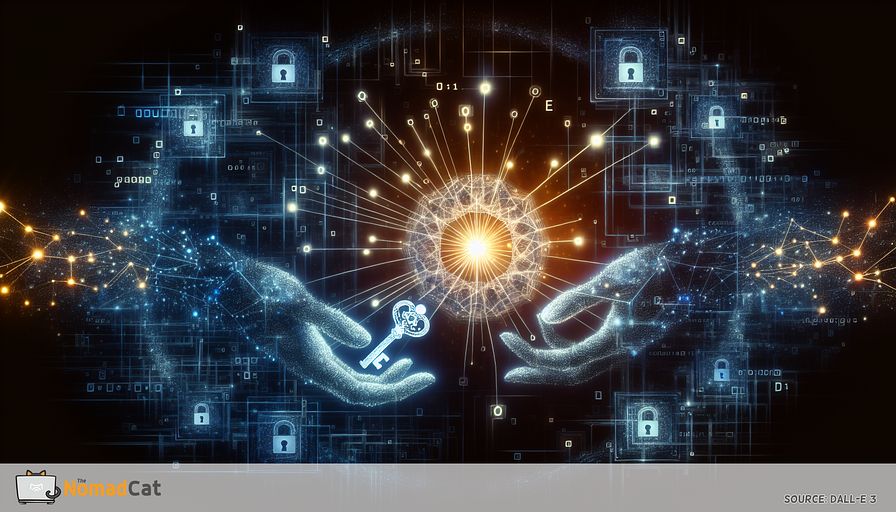
introduction to quantum cryptography
If there’s one thing that can make even seasoned computer security experts break into a sweat, it’s the thought of a cyber-attack bypassing their encryption protocols. Enter quantum cryptography, a technology that’s so futuristic it might as well be wielded by secret agents from a sci-fi thriller. However, it’s very much grounded in real science, and it’s here to revolutionize data encryption. Picture this: utilizing the mind-bending principles of quantum mechanics to make your data not just secure, but *unbreakably* secure. Sound intriguing? Let’s see what all the fuss is about.
First things first, quantum cryptography leverages the quirky and surprising properties of quantum mechanics, and we're not talking about magic tricks with top hats and rabbits. We're referring to the behaviors of subatomic particles, specifically qubits, which are the quantum equivalents of classical computer bits. Whereas a classical bit holds a value of either 0 or 1, a qubit can exist in multiple states simultaneously, thanks to a principle known as superposition.
Here’s where it gets thrilling. This technology uses concepts like superposition and another quantum principle called entanglement to facilitate secure communication. When two particles are entangled, the state of one instantaneously influences the state of the other, regardless of the distance between them. It’s Einstein's "spooky action at a distance" put to good use in cybersecurity. Any attempt at eavesdropping on the quantum channel would disturb these states, making it immediately detectable. That’s like having an alarm go off the moment someone merely thinks about sneaking a peek at your encrypted data.
breaking down the magic
- Quantum mechanics principles like *superposition* and *entanglement* form the core of quantum cryptography.
- Qubits can represent multiple states at once, unlike classical bits.
- Any interception of data in a quantum system is immediately noticeable, making eavesdropping practically impossible.
The practical application of this fascinating technology is known as Quantum Key Distribution (QKD), and it is rewriting the rulebook on secure communication. Imagine negotiating a secure key between two parties using qubits. Any attempt by a third party to intercept the key would alter the state of the qubits, alerting the parties to the presence of an eavesdropper and allowing them to take preventive measures. It's like having a tamper-evident security seal on your data transmissions.
Understanding quantum cryptography is not just an intellectual exercise; it’s essential for anyone interested in the future of cybersecurity. In a world where data breaches make headlines almost daily, this technology offers the promise of a secure, impenetrable line of communication. So hold onto your hats, folks—quantum cryptography is gearing up to change the game, and it's wise to stay ahead of the curve.
quantum key distribution (QKD) and its importance
Ever wondered what makes quantum cryptography truly special? Well, the cornerstone of this dazzling technology is Quantum Key Distribution (QKD). Simply put, QKD is the mechanism that ensures the secure sharing of encryption keys between parties, making sure that your sensitive data stays safe from prying eyes.
Here’s the magic in simple terms. QKD enables two parties to produce a shared random secret key, which can be used to encrypt and decrypt messages. Like the best spy movies, but without the bad guys catching on. The uniqueness of QKD lies in its use of quantum mechanics principles to detect any interference or eavesdropping. If an interloper tries to intercept the key, the properties of the quantum particles (those famous qubits) get perturbed, signaling a breach. It’s like having a watchful guard dog that barks at the mere scent of a stranger.
how QKD works its wonders
Let’s break it down a bit more. QKD primarily relies on two main protocols: the BB84 and the E91.
- BB84 Protocol: Conceived by Charles Bennett and Gilles Brassard in 1984 (hence the name), this protocol uses the polarization states of photons to share a secure key. Think of photons as tiny messengers that carry key information in their specific "wears." Any interception changes what the messenger is wearing, creating a noticeable change.
- E91 Protocol: Developed by Artur Ekert in 1991, this protocol utilizes quantum entanglement to distribute the key. Here, entangled photon pairs are sent to two parties. The spooky bit? Measuring one affects the other, and any tampering will be evident. It’s the quantum version of a synchronized dance routine – any interference, and you end up stepping on toes.
The significance of QKD in cybersecurity cannot be overstated. In a world where traditional encryption methods are increasingly vulnerable to sophisticated attacks, quantum cryptography offers a shield. Once the key is securely shared via QKD, it can be used in standard encryption algorithms to protect data exchange.
real-world application and case studies
But theories are one thing; practical application is another. Let’s take a look at some real-world scenarios where QKD has made a dent.
In 2017, China launched the world’s first quantum satellite, Micius, which successfully facilitated a secure communication link between two ground stations thousands of kilometers apart. Using QKD, Micius enabled these stations to share encryption keys without fear of interception. This was not just a scientific milestone, but also a loud and clear message about the viability and potential of quantum communication.
Europe is not far behind. The European Union has funded several projects under its Quantum Flagship initiative, aimed at integrating QKD into existing communication infrastructures. One noteworthy project is “OpenQKD,” which seeks to demonstrate the feasibility of QKD across various sectors, including healthcare and finance. Industry giants and research institutions are collaborating to make quantum-safe communication a norm rather than an exception.
challenges in implementing QKD
While QKD sounds like a cybersecurity silver bullet, it’s not without its challenges. Implementing QKD into existing infrastructure requires significant investment in new technology and expertise. Additionally, the current range of QKD links is limited, making long-distance key distribution a non-trivial problem.
Moreover, QKD systems are still prone to practical vulnerabilities, such as side-channel attacks, where attackers exploit the physical implementation rather than the underlying quantum principles. This means that while your qubits might be secure, the devices handling them better be up to the task too.
In conclusion, while QKD is not a panacea, it's a giant leap towards more secure communication. By ensuring that encryption keys can be shared securely and any attempts at eavesdropping are immediately detected, QKD is ushering in a new era of cybersecurity. It's an exciting time for tech enthusiasts and security professionals alike—because who wouldn’t want a glimpse into the future of unbreakable encryption?
integration and collaboration to implement quantum cryptography
Now that we’ve ventured through the mind-boggling ideas behind quantum cryptography and QKD, it's time to consider the nuts and bolts of integrating this quantum wizardry into our current cybersecurity frameworks. Spoiler alert: it’s not as simple as plugging in a new device and hitting the "go" button. It requires synergy among various stakeholders, heaps of innovation, and a sprinkle of good ol' perseverance.
a united tech front
First and foremost, the integration of quantum cryptography hinges on collaboration among key players: tech companies, research institutions, government bodies, and, naturally, the security divisions within organizations. The fusion of hardware and software based on quantum principles is uncharted territory for many, necessitating a cooperative ethos.
- Tech companies: Leading firms in technology must spearhead the development of quantum-compatible hardware and robust software solutions. This requires not only substantial R&D investments but also the formation of consortia to share insights and innovations.
- Research institutions: Academia and research labs play a critical role by diving deep into theoretical underpinnings and practical challenges. They can provide the fundamental knowledge needed to turn quantum cryptographic concepts into operational technologies.
- Government bodies: Governments need to establish supportive frameworks—including funding, policies, and regulations—that foster the research and deployment of quantum cryptographic solutions.
- Organizations' security divisions: Internal cybersecurity teams must upskill and reskill to manage and deploy these new technologies. Knowledge-sharing platforms and regular training sessions could be the game changers here.
innovation: the secret sauce
The road to integrating quantum cryptography is paved with the intent to innovate. Engineers and tech specialists must adopt a culture of continuous learning and adaptation. Here are key steps to ensure this:
- Foster creativity: Encourage a mindset where creative problem-solving is the norm, not the exception. Give teams the freedom to experiment, fail, and learn.
- Interdisciplinary teams: Form teams comprising experts from multiple disciplines—quantum physics, computer science, engineering, and cybersecurity. This melting pot of knowledge leads to a holistic approach to integrating quantum cryptography.
- Hackathons and workshops: Organize events that allow professionals to tinker with quantum technologies. This hands-on experience can significantly expedite the learning curve.
the hurdles and solutions
Of course, no journey is without its speed bumps. Implementing quantum cryptography poses several challenges, but fret not—there are ways to navigate them:
- Cost and scalability: The technology is still in its infancy and can be astronomically expensive. To mitigate this, initial deployment could focus on sectors that can afford the investment, serving as testbeds for broader applications.
- Infrastructure overhaul: Existing infrastructure might require substantial upgrades. While daunting, a phased approach—implementing quantum cryptography in critical areas first—can ease the transition.
- Training and expertise: There’s a shortage of professionals skilled in quantum technologies. Partnering with educational institutions to create specialized courses and certifications could bridge this gap.
Indeed, the path to quantum cryptography integration involves meticulous planning and collaborative effort. But the payoff is immense: a world where data breaches and eavesdropping become tales of the past. For now, though, it’s about gathering our forces—our tech knights in shining armor—and preparing for this quantum leap in cybersecurity.
future prospects and conclusion
Quantum cryptography is not just another tech buzzword; it represents a fundamental shift in how we think about data security. As we've explored, this technology holds immense promise in creating unbreakable encryption, thanks to the quirky but powerful principles of quantum mechanics. From superposition to entanglement, these principles could very well become the bedrock of next-generation cybersecurity.
why we should care
Let's face it — traditional encryption methods are increasingly becoming vulnerable to sophisticated attacks. The advent of quantum computers could potentially render many of these methods obsolete, cracking codes that were once deemed unbreakable. To stay ahead of this curve, embracing quantum cryptography is not just an option, it’s a necessity.
- Sophisticated security: Quantum Key Distribution (QKD) offers a level of security that classical methods can only dream of. With eavesdropping instantly detectable, the integrity of data communication is fundamentally enhanced.
- Real-world applications: From secure financial transactions to safeguarding sensitive governmental communications, the potential applications are vast and transformative.
- Long-term viability: Investing now in quantum cryptography ensures preparedness for the quantum era, where quantum computers could otherwise wreak havoc on current encryption standards.
the road ahead
However staggering the leap to quantum cryptography might seem, it's important to recognize the intertwined effort required from various domains — tech giants, academic institutions, and government bodies. The journey involves innovation, collaboration, and a willingness to surmount challenges like cost and infrastructure overhaul. Training and skill development in quantum technologies also stand out as critical elements for success. Who knew securing data could be so intricately cool?
embracing the shift
In a world where data breaches are far too common, the proactive adoption of quantum cryptographic techniques could be the game-changer in our eternal quest for secure communication. Staying ahead of emerging threats means continuous innovation and never resting on our laurels. So, here's to quantum cryptography: a seemingly sci-fi concept rapidly morphing into our best defense against the ever-evolving landscape of cybersecurity threats. Let’s embrace this technology and prepare for a future where our data remains as unbreakable as the quantum bonds that protect it.
Pretty exciting, isn’t it?


